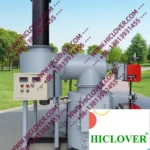
A Technical Dossier on Thermal Destruction Engineering: An Analysis of HICLOVER Waste Incinerator Systems
The engineered thermal destruction of waste is a critical process governed by stringent physical principles and regulatory standards. A modern HICLOVER waste incinerator represents a sophisticated application of combustion science, designed for high-efficiency mass and volume reduction of diverse waste streams. Adherence to established combustion temperature standards for an incinerator for industrial waste management is paramount for ensuring the complete breakdown of hazardous compounds. These systems are engineered for operational reliability, consistently maintaining primary chamber temperatures between 800-1000°C and secondary chamber temperatures exceeding 1200°C. This controlled, high-temperature environment is essential for achieving near-complete combustion and compliance with international emission protocols, including those referenced by the World Health Organization (WHO). The fundamental design of these waste incinerators focuses on achieving specific retention times for flue gases, which is a critical parameter for the destruction of dioxins and furans.
Fundamental Engineering Principles of Dual-Chamber Incineration
The core of modern thermal waste treatment technology lies in the dual-chamber combustion process. This design is not arbitrary; it is a carefully engineered solution to a complex chemical problem: how to fully combust solid waste while neutralizing the hazardous gaseous byproducts generated during the initial phase. This separation of functions between two distinct chambers allows for precise control over the different stages of thermal decomposition and oxidation, which is fundamental to achieving both efficient waste destruction and minimal environmental impact. The engineering behind this process involves a deep understanding of thermodynamics, fluid dynamics, and material science to ensure system longevity and consistent performance under extreme thermal stress.
Primary Combustion Chamber: Design and Function
The primary chamber serves as the initial stage for thermal processing. Waste is loaded into this chamber, where it is subjected to temperatures typically maintained in the range of 800°C. The primary objective here is not complete combustion but rather a process of pyrolysis and gasification. Under controlled, often sub-stoichiometric (oxygen-starved) conditions, the solid waste is thermally decomposed into a mixture of volatile organic compounds, carbon monoxide, and other combustible gases, leaving behind an inert ash. The chamber itself is constructed from heavy-gauge steel and lined with high-density, multi-layered refractory materials. This lining is engineered to withstand extreme temperatures and thermal cycling, preventing heat loss and protecting the structural integrity of the incinerator. The design of the loading door, whether a top-loading or front-loading configuration, is also a critical engineering consideration, impacting operational safety, thermal efficiency, and the types of waste that can be processed effectively. HICLOVER systems are designed with robust refractory linings rated for temperatures well above their standard operating range, providing a significant safety and durability margin.
Secondary Combustion Chamber: The Key to Emission Control
The gaseous mixture produced in the primary chamber is directed into the secondary chamber, often referred to as the afterburner. This is where the critical process of complete thermal oxidation occurs. The secondary chamber is operated at significantly higher temperatures, typically exceeding 1200°C, and with an excess of air to ensure an oxygen-rich environment. This combination of high temperature and excess oxygen is engineered to destroy harmful pollutants, including dioxins, furans, and volatile organic compounds (VOCs), breaking them down into simpler, less harmful molecules like carbon dioxide and water vapor. A crucial design parameter is the gas retention time—the duration for which the flue gases are held within this high-temperature zone. To comply with stringent international standards, such as the EU Waste Incineration Directive, a minimum retention time of two seconds is often required. You can review the technical basis for this standard here: https://www.google.com/search?q=EU+Waste+Incineration+Directive+secondary+chamber+retention+time. Achieving this retention time is a function of chamber volume and gas flow rate, requiring careful fluid dynamic modeling during the design phase to prevent gas short-circuiting and ensure all entrained particulates and gases are fully treated.
System Architecture and Customization for Diverse Waste Streams
Procurement of an industrial incineration system requires a detailed analysis of not only the core combustion technology but also the overall system architecture and its suitability for the intended application. The operational environment, waste stream characteristics, and regulatory landscape dictate the optimal configuration. Decision-makers must evaluate key architectural choices, including the deployment model (fixed vs. mobile), the level of automation in the control system, and the necessity and type of downstream flue gas treatment. These choices directly impact capital expenditure, operational costs, logistical feasibility, and long-term compliance. The trend towards decentralized waste management, particularly in remote regions or as part of emergency response infrastructure, has driven significant innovation in modular and adaptable system designs.
Fixed vs. Containerized Mobile Systems
Fixed, or stationary, waste incinerators are permanent installations designed for continuous, high-volume operation at a single site. These are typically specified for hospitals, large-scale agricultural operations, manufacturing plants, and municipal waste facilities where a consistent waste stream is generated. Their design can be optimized for the specific footprint and utility connections of the facility. In contrast, containerized mobile systems from HICLOVER offer unparalleled flexibility. These units are fully assembled within a standard ISO shipping container, integrating the incinerator, fuel tank, generator, and control systems into a self-contained, “plug-and-play” module. This design is ideal for applications requiring rapid deployment or operation in areas with limited infrastructure. It directly addresses the needs of remote mining and oil exploration camps, humanitarian crisis zones requiring rapid response for infectious waste, and military forward operating bases. This modularity is a key component of building supply chain resilience, allowing organizations to deploy critical waste management assets wherever they are needed without the delays associated with civil construction.
Control Systems: PLC Automation vs. Manual Operation
The control system is the operational brain of the incinerator. Manual systems, while lower in initial cost, rely heavily on operator skill and diligence to maintain optimal combustion parameters. They are suitable for smaller-scale operations where constant supervision is feasible. However, for most industrial and medical applications, a Programmable Logic Controller (PLC) based automation system is the superior engineering choice. PLC systems offered by